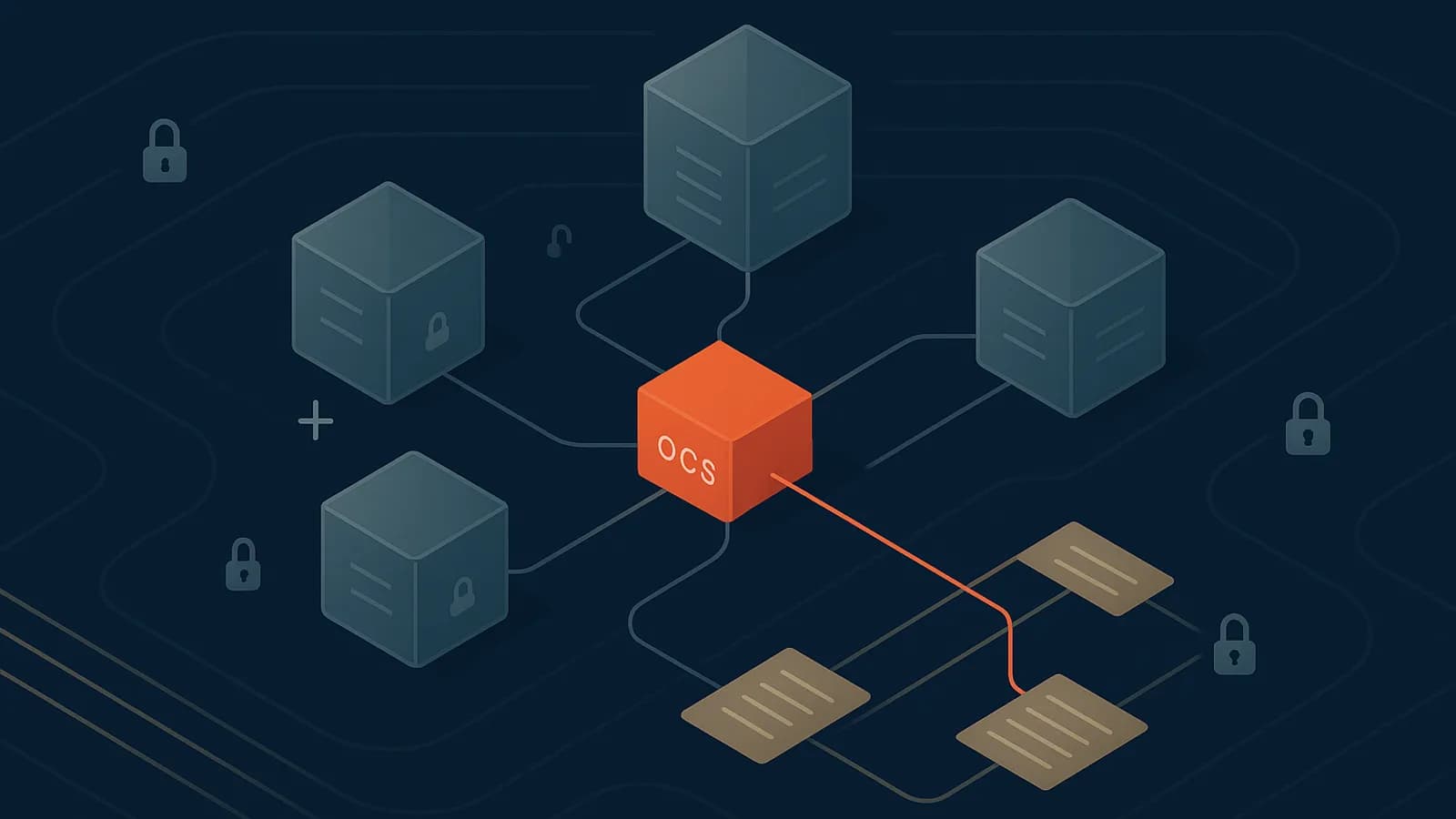
Multi-tenant MVNEs are rebuilding core BSS/OSS to meet tighter SLAs, stricter data-residency rules, and wholesale models shifting from flat fees to usage-linked settlement. The center of gravity is moving to shared-but-isolated real-time charging and automated provisioning. Decisions taken this year on tenancy boundaries, catalog strategy, and integration adapters will define cost-to-serve for a decade. This piece maps practical trade-offs in tenancy isolation, provisioning, and a workable approach to multi-IMSI rating anchored on a resilient multi-tenant OCS.
Why modernise now: regulation, revenue mix, and SLA pressure
The MVNE operating model is being compressed from both ends. Host-MNO controls are tightening as regulators push data location, lawful intercept, and auditability deeper into wholesale contracts. At the same time, digital MVNOs expect launch cycles measured in weeks, not quarters. Incremental workflow tuning can no longer absorb that spread when the underlying tenancy model was designed for a smaller number of branded resellers.
Data-residency pressure is no longer a European-only issue. GDPR constraints remain material, but India and several GCC markets now require deployment designs that separate data-plane, mediation, support access, and retention policy by jurisdiction. The practical impact is higher architectural granularity. Subscriber profile data, charging events, recordings, and operational logs may not be movable across the same boundaries, even when a single commercial tenant operates in multiple markets.
Wholesale economics are shifting toward usage-based charging with roaming exposure. Near-real-time settlement to hosts is moving from revenue assurance afterthought to board-level working-capital metric.
Digital MVNO pipelines depend on pre-integrated eSIM RSP, MNP, and DCB. Slow onboarding now blocks pipeline conversion rather than merely delaying revenue.
5G SA adds policy and catalog complexity through PCF, while shared catalogs must support VoNR, IMS, FWA, IoT/eSIM, and RCS without cross-tenant bleed-through.
Fraud controls must be tenant-specific as OTT bypass and A2P grey routes hit different brands with different risk profiles.
For a Tier-2 MNO, Western Europe, ~18M subscribers, the trigger was not a single regulatory deadline. It was the compound cost of exceptions. Each MVNO launch added a bespoke mediation rule, a manual settlement adjustment, and a reporting variance across SS7, Diameter, SIP, and GTP. By the time host finance demanded daily variance reporting, the legacy BSS/OSS stack could calculate the answer only after reconciliation windows had already closed.
Tenancy isolation patterns that scale without duplicating everything
The first architectural mistake is to frame tenancy as a binary choice between one shared platform and full stack-per-tenant duplication. MVNE economics rarely tolerate full duplication beyond a handful of high-value tenants. The stronger pattern is selective separation across data, control, and finance planes, with the separation level tied to contract, jurisdiction, and operational blast radius.
Control-plane segmentation should follow protocol domains. Diameter realms and SCTP associations can isolate policy, charging, and authentication flows. SIP trunks and SBC profiles can limit voice exposure by tenant. SS7 point codes and routing tables can contain roaming and number-translation incidents. This design does not remove shared infrastructure. It prevents one tenant’s signaling defect, fraud spike, or misconfigured interconnect from becoming a platform-wide event.
For BSS, CRM, and CDR warehousing, schema-level or logical database isolation is often sufficient. Physical clusters should be reserved for data-sovereignty mandates, high-risk tenants, or workloads that cannot accept co-mingled operational metadata. The same principle applies to the HLR, HSS, and UDM: partition by IMSI ranges and MSISDN blocks, but enforce strict AuC key management. Access separation must be visible in audit trails, not merely described in an operations manual.
Shared Kubernetes clusters can work when namespace isolation, network policies, and resource quotas are enforced with discipline. Charging, mediation, and provisioning workloads need per-tenant caps, HPA limits, and back-pressure rules. Without those controls, a high-volume campaign or failed retry storm can consume capacity intended for other tenants. Disaster recovery also needs tenant-level runbooks. RPO/RTO profiles should reflect tenant contracts, host-MNO dependencies, and lawful-intercept handover continuity.
The same logic applies northbound. NEF and SCEF APIs should sit behind per-tenant gateways, mTLS, rate limits, and feature flags. A MVNE servicing 12+ tenants in EMEA used this pattern to keep one external API schema while restricting high-risk calls, such as sponsored-data triggers and network-location queries, to tenants with explicit host approval. The commercial benefit was not just security. It reduced integration variance across tenants.
Real-time charging and catalog: getting multi-tenant OCS/CCS right
Charging is where shared-platform economics either hold or fail. A shared OCS/CCS with hard partitioning usually beats per-tenant charging silos on run-rate cost. That conclusion holds only if latency, quota isolation, and reconciliation are engineered before migration. Retrofitting those controls after tenants are live tends to create tariff freezes, settlement disputes, and avoidable host escalations.
The practical design is a single charging instance with strict tenant partitions. Balance groups, rating contexts, session counters, and quota buckets should not share mutable state across tenants. Thread pools and queue priorities need the same separation, otherwise a heavy data session mix in one tenant can degrade real-time voice or prepaid data decisions for another. Diameter traffic shaping is part of charging design, not a border-network afterthought. Per-tenant connection quotas, circuit breakers, and retry budgets reduce the risk of cascading CCR/CCA failures during network instability.
Latency targets should be stated in operational terms. For high-volume prepaid and hybrid tenants, sub-20 ms 95th percentile for CCR/CCA round-trips under sustained load is a reasonable design target, provided network distance and host routing do not add avoidable delay. The point is not a single lab benchmark. It is predictable behavior at month-end, during roaming peaks, and during promotional campaigns that trigger concurrent balance lookups.
Catalog strategy is the second fault line. One master catalog with tenant overlays is usually cleaner than cloned catalogs. Price plans, add-ons, throttling rules, fair-use policies, bundles, and eligibility checks can be parameterized by tenant. Cloning looks faster at launch, but drift appears quickly when tax rules, roaming zones, or throttling thresholds change. Once cloned catalogs diverge, revenue assurance teams become the control layer, which is a poor use of scarce commercial expertise.
Policy must track the catalog. PCF policies for 5G SA need tenant-specific rules while preserving PCRF parity for NSA services. Converged charging should cover IMS data, voice, SMS, and GTP-U usage with consistent wallet behavior. Roaming and sponsored data should be separated into distinct buckets, IOT tables, and partner-discount logic. Mixing them for convenience can wash out margin before the first settlement review.
A Tier-1 MNO, APAC, ~50M subscribers, reached that conclusion after finding that retail prepaid assumptions had leaked into wholesale tenant rating. The remediation was not another settlement spreadsheet. It was a partitioned charging model that correlated OCS events, host CDRs, and TAP/RAP files daily. Variance moved from a month-end dispute to an operating KPI.
Provisioning and onboarding: compressing weeks without breaking controls
The onboarding question is no longer whether an MVNE can launch a tenant. It is whether launch work can be repeated without custom engineering, LI rework, or settlement ambiguity. Pre-built adapters are the visible part of that answer. The less visible part is a strict RASCI across host MNO, MVNE, and tenant, with no uncertainty over who approves routing, credit exposure, numbering, and production cutover.
Adapter coverage should be treated as a wholesale product capability, not project collateral. The standard library now needs HLR/HSS/UDM, PCRF/PCF, IMS/SBC, SMSC/MMSC, GGSN/PGW/UPF, MNP and HLR dips, eSIM RSP with SM-DP+ and SM-SR, NEF/SCEF, and DCB. The adapters do not remove host governance. They standardise how approvals and technical changes enter the provisioning path.
The golden path should be codified before the next tenant enters delivery. That means IMSI and MSISDN allocations, MNC/MCC usage, routing codes, SBC interconnects, DNS/ENUM, and signaling-firewall rules sit in templated checklists with accountable owners. Provisioning pipelines should be event-driven and idempotent, with retry behavior that does not create duplicate subscribers, duplicate wallets, or inconsistent profile states.
Testing also needs to move earlier. OTA test suites should cover SIM and eSIM profiles, VoLTE/VoWiFi attach, RCS registration, wallet creation, bundle assignment, and first-bill generation. For a light-MVNO model with pre-cleared host interconnects, a launch target of ~14–21 days is credible. For a full-MVNO with IMS, MNP, and deeper routing control, ~30–45 days is a more defensible planning range.
Self-care can shorten delivery if it is bounded. Tenants should be able to manage number inventory, tariff publishing windows, voucher and OCS wallet operations, and A2P senderID requests. Approval workflows must still govern credit-risk changes, regulated routing, and message-traffic exposure. The operating target is not unlimited tenant autonomy. It is fewer tickets for routine work and clearer control over exceptions.
The KPI set should be explicit from day one: activation success above 99.5%, SIM profile download success above 99.0%, CDR mediation lag under five minutes, and first-bill accuracy above 99.9%. A Greenfield MVNO, post-2023, multi-IMSI stack, used those measures to keep host acceptance focused on evidence rather than project sentiment. The result was a shorter path from first IMSI to billable base, with fewer late changes in credit-control logic.
The closing takeaway is operational rather than rhetorical. MVNEs that standardise isolation patterns, consolidate onto a partitioned OCS/CCS, and industrialise onboarding will reduce run-rate cost and pull forward tenant revenue. The commercial edge over the next 12–18 months will sit in predictable SLAs, fast launches, and clean settlement with host MNOs.